About
If forced to define myself, I would say I am a computational and theoretical physicist, with a twist of an applied mathematician, with background in medical physics and electrical engineering. I try to organize my work so that I can dirty my hands with theory, computation and experiments (analysis), if possible. More than anything I consider myself a tool builder, but I like to think that I speak all three languages fluently enough to uniquely bridge many projects, especially considering the fluency in not only methods, but also domain knowledge, like physics, biology, maths, engineering and increasingly machine learning & AI.
I'm currently (for a few more months) a PhD candidate at the University of Rhode Island (advisor: Gaurav Khanna) and I am a Visiting Collaborator at the Princeton Plasma Physics Laboratory, but I live in the New York metropolitan area, where I moved when I started collaboration with the researchers from the Flatiron Institute researchers (co-advisor: Ore Gottlieb).
My doctoral work develops numerical methods for physical systems governed by partial differential equations (PDEs), and pipelines that turn sparse, noisy instrument data into quantitative physical images and maps. Across three projects the unifying thread is the same: building forward models of a physical system and the computational machinery to solve them, or to invert them against real measurements, at scale, on national high-performance computing (HPC) systems, with extensive use of GPU-accelerated codes.
Also: board member of the Polish Astrobiology Society, member of the Event Horizon Telescope Collaboration, and the dog mom of Channi - a miniature dachshund.
Current research
Past research is either published, posted on the blog, never progressed enough to earn it, or was never worth it.
Numerical methods for coupled PDEs in complex geometries
Well-balanced conservative finite-volume method on dynamical spacetimes
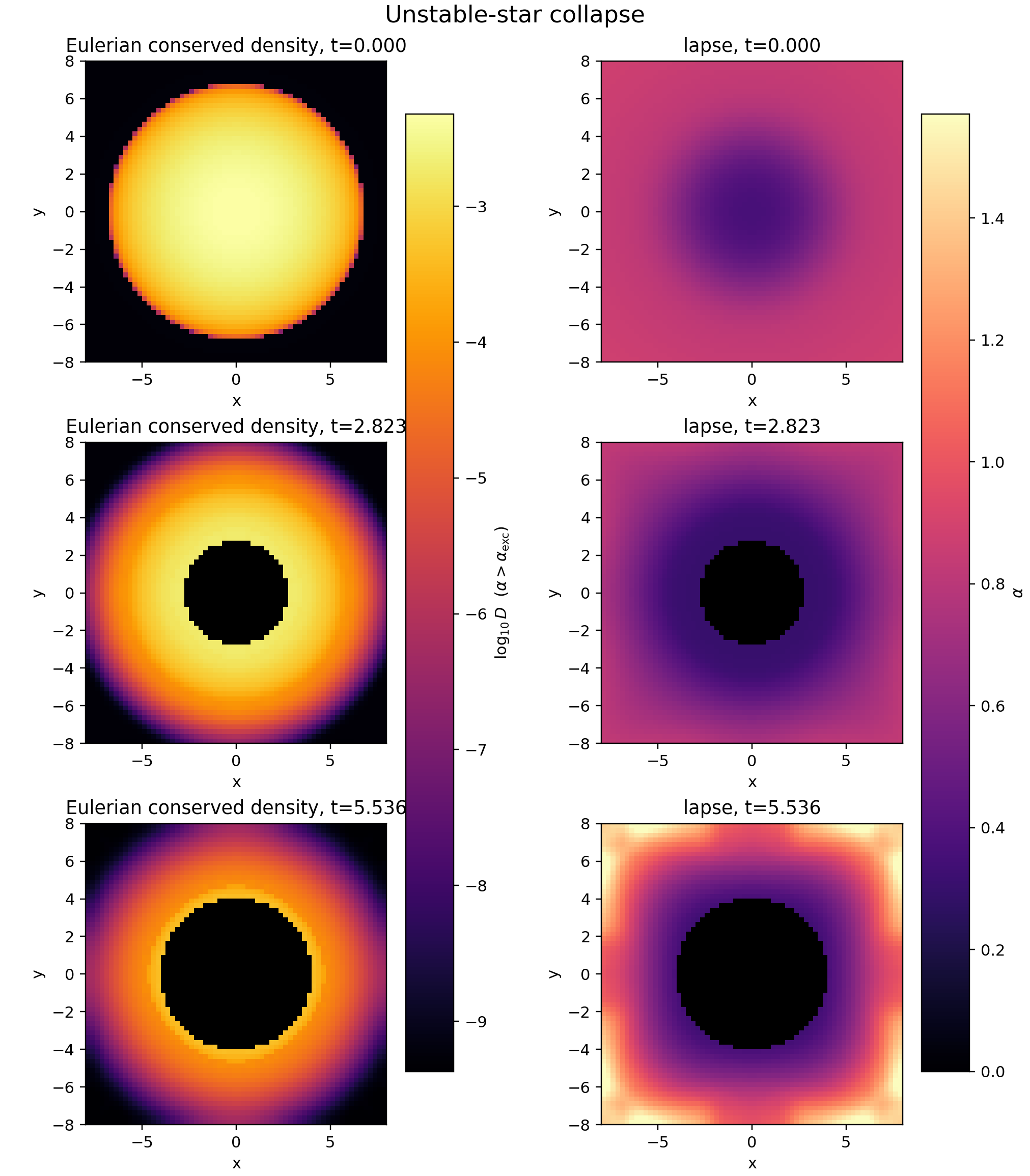
Developed a strictly flux-conservative finite-volume framework for the two-way coupled Einstein-Euler system, built on a new first-order hyperbolic formulation of Einstein’s equations and providing its first coupling to matter. Well-balanced to machine precision (Tolman-Oppenheimer-Volkoff equilibria), admissibility and hyperbolicity-preserving; demonstrates long-time neutron-star equilibrium and a controlled collapse to a black hole (Manuscript in preparation).
Latest from the blog
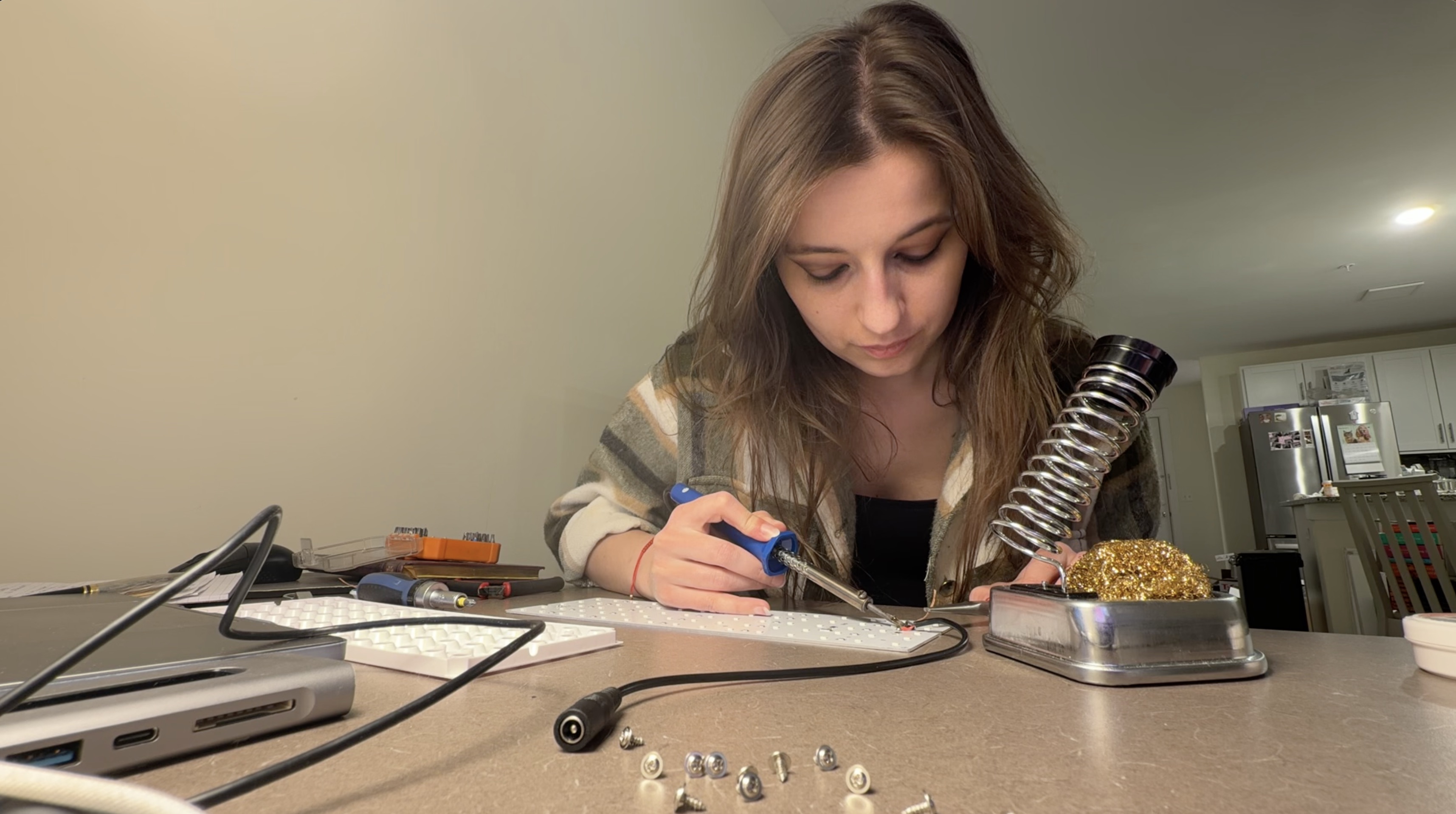
Building an incubator for Genspace's Open Plant project
I built a bigger, networked plant incubator from scratch for the Open Plant community biology project at Genspace.
New invited talks
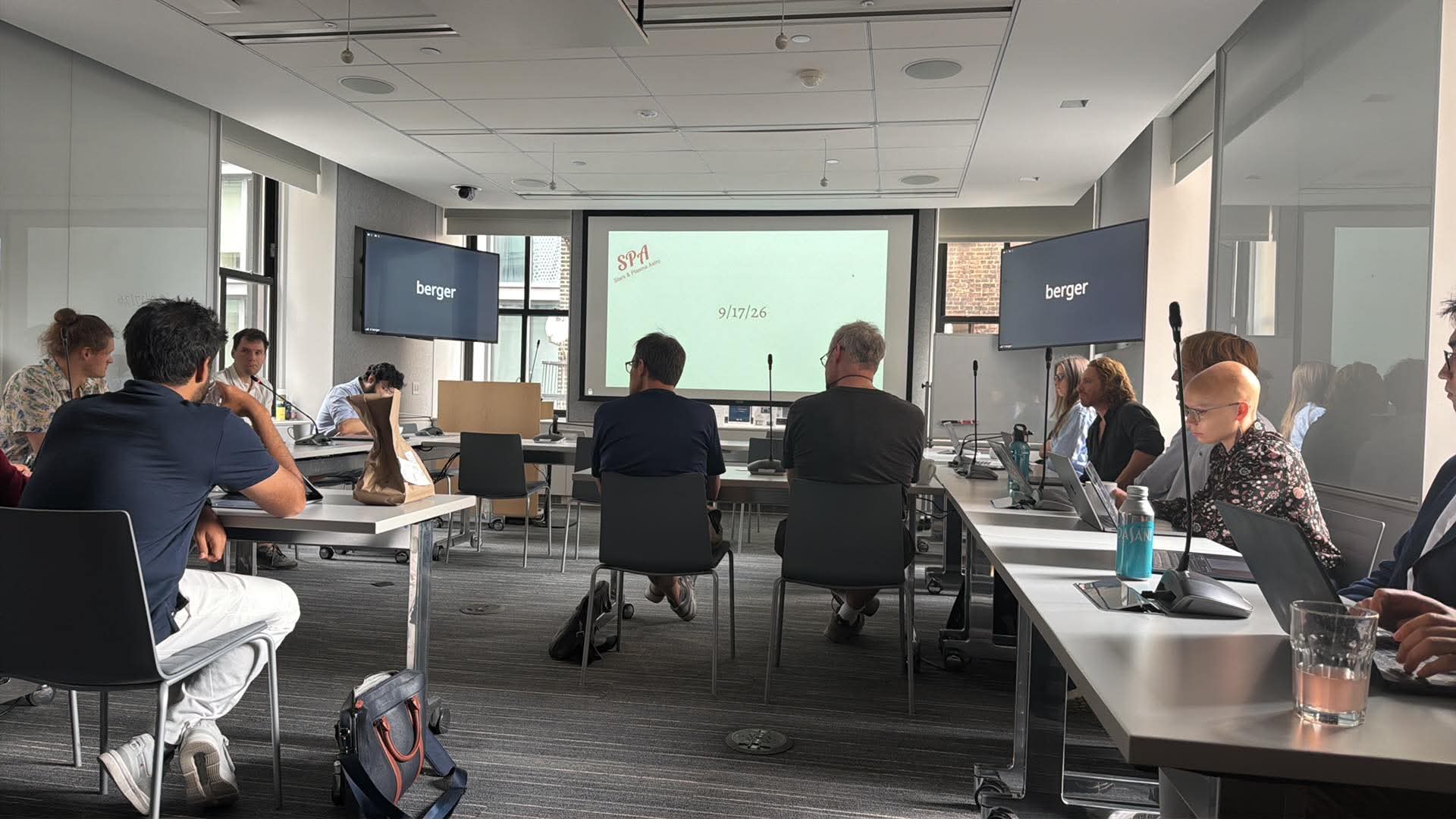
Invited talks at the CCA Flatiron Institute and THEA Columbia University
New paper: can the EHT tell Kerr from Kerr–Hayward?
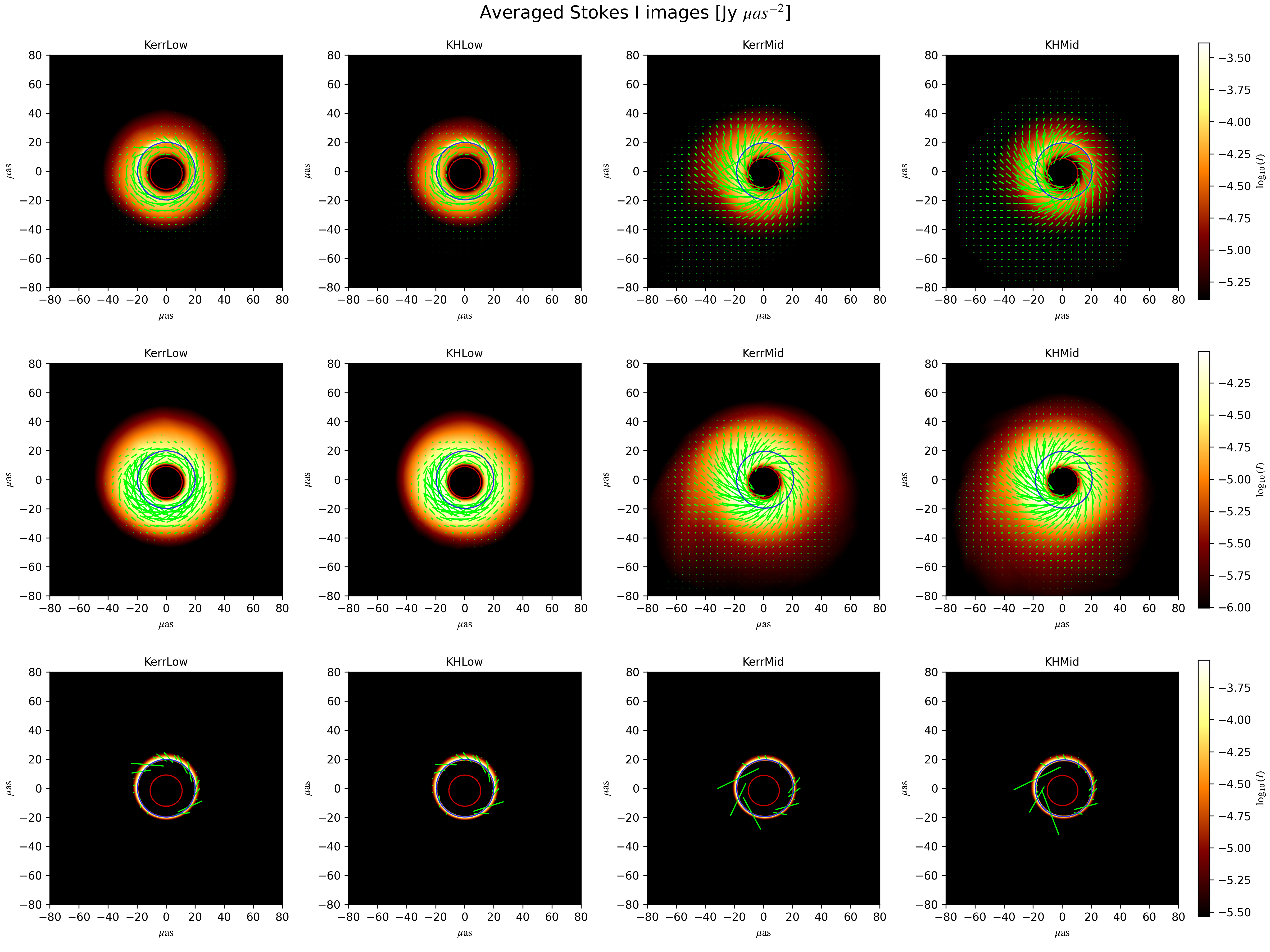
GRMHD and polarized radiative transfer in a singularity-free black hole spacetime.
Selected publications
- On the observational distinguishability of the Kerr and Kerr–Hayward metrics to EHT. GRMHD simulations and polarized radiative transfer in a Kerr–Hayward spacetime. Under certain conditions the singularity-free correction yields observables effectively indistinguishable from Kerr in EHT measurements (2026). Phys. Rev. D 114, 023008
- Capra: Scalable HEALPix-native intensity reconstruction for high-resolution IMAP analyses. Thread-parallel pipeline with near-linear weak scaling and bounded memory (2026). arXiv:2608.25134, Code
- Attitude control of an Earth observation satellite with a solar panel (2022). Proceedings of the XXI Polish Control Conference. doi:10.1007/978-3-031-35170-9_37
- Telerobotic Mars Expedition Design Features the design by our team, which won 2nd prize in the Mars Society's global contest for a telerobotic Mars expedition. My part: landing and base site selection, and the mission's science objectives.
Contact
I'm happy to talk about collaborations, ideas, or just science. Email me at bukowieckan@gmail.com.
New York metropolitan area